✨✍️ ONE OF THE MOST TRICKY THINGS TO DO IN THE EARLY STAGE OF A BUSINESS IS SEPARATING THE CAPITAL FROM THE PROFITS BECAUSE YOU ARE JUST STARTING AND THERE ARE NO OTHER MEANS OF SURVIVAL. ✨✍️
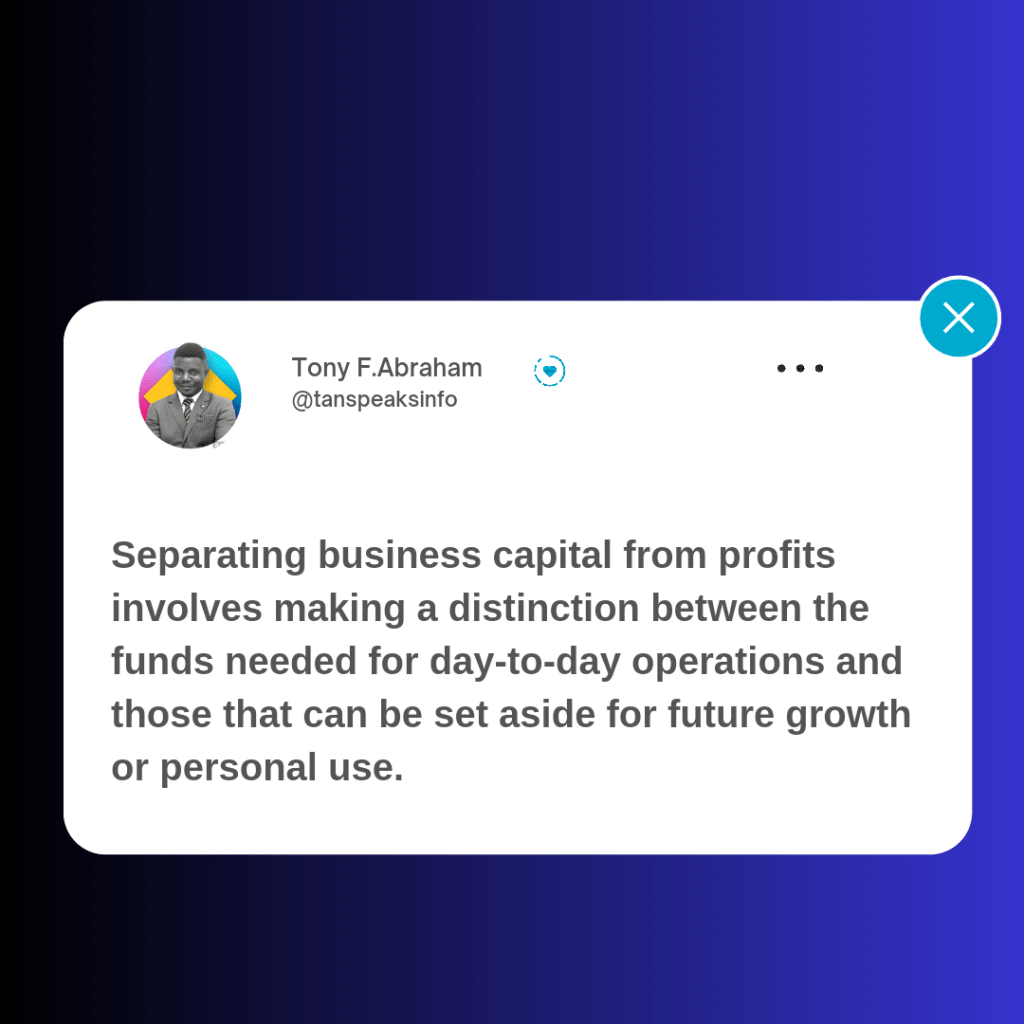
Separating business capital from profits involves making a distinction between the funds needed for day-to-day operations and those that can be set aside for future growth or personal use.
The decision on when to separate these two should be based on evaluating the financial health and goals of the business.
As an entrepreneur, one of the key components that make up an entrepreneur is the component of DISCIPLINE.
I understand the factor of personal economy as an entrepreneur but it is also important as an entrepreneur to keep the eyes of the business wide open so as not to go blind.
The economy of the business is the eyes of the business. A certain percentage should be allocated to the business to keep the eyes operational.
It is important to regularly assess the liquidity and cash flow requirements of the business to ensure there are sufficient funds to cover operational expenses and emergencies.
Once the necessary working capital is set aside, the remaining profits should be evaluated against the business’s growth plans and long-term financial objectives.
If the business needs additional funds for expansion, investing in new equipment, or hiring employees, it may be prudent to separate some of the profits for these purposes.
Similarly, if the owner wishes to enjoy personal benefits or diversify their investments, setting aside a portion of the profits for personal use would be appropriate.
Ultimately, the decision to separate business capital from profits should be strategic and aligned with the current and future needs of the business and owner.
•
•
🆃🅰🅽
 TAN BLOG
Leave a comment